Password required
This work is protected due to confidentiality agreements and is only intended for professional viewing.
To request access, please email kyletizio2@gmail.com.

tldr;
50
%
35
%
9
%
More same-day decisions
Continuous collaboration
Easier connections between platforms
Teams use Aha! to innovate and build products but they use Slack to communicate about them. Those conversations often spark the need to capture ideas, detail requirements, or comment on roadmap plans.
– CS Manager
what we built
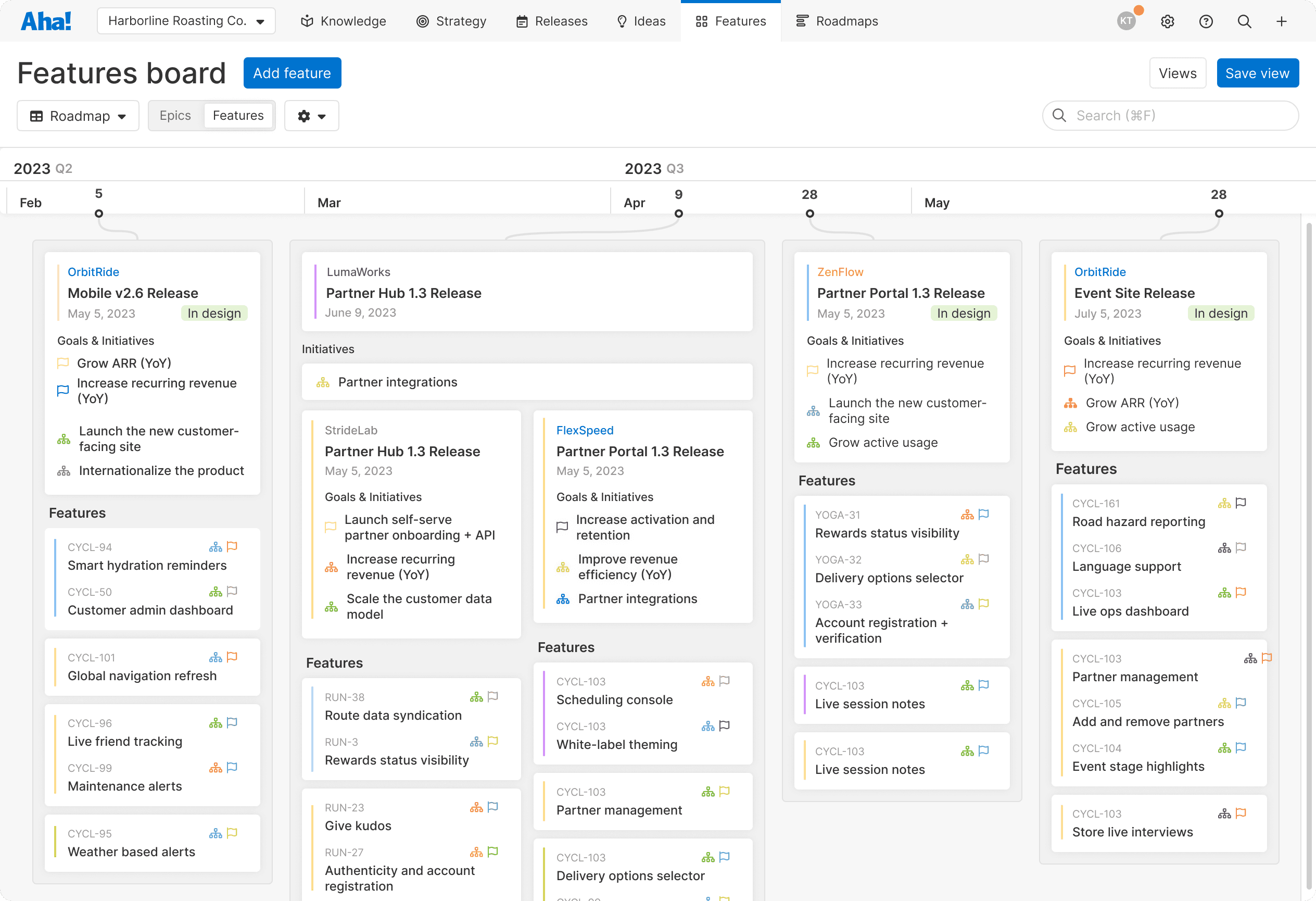
We connected Slack conversations directly to Aha! records.
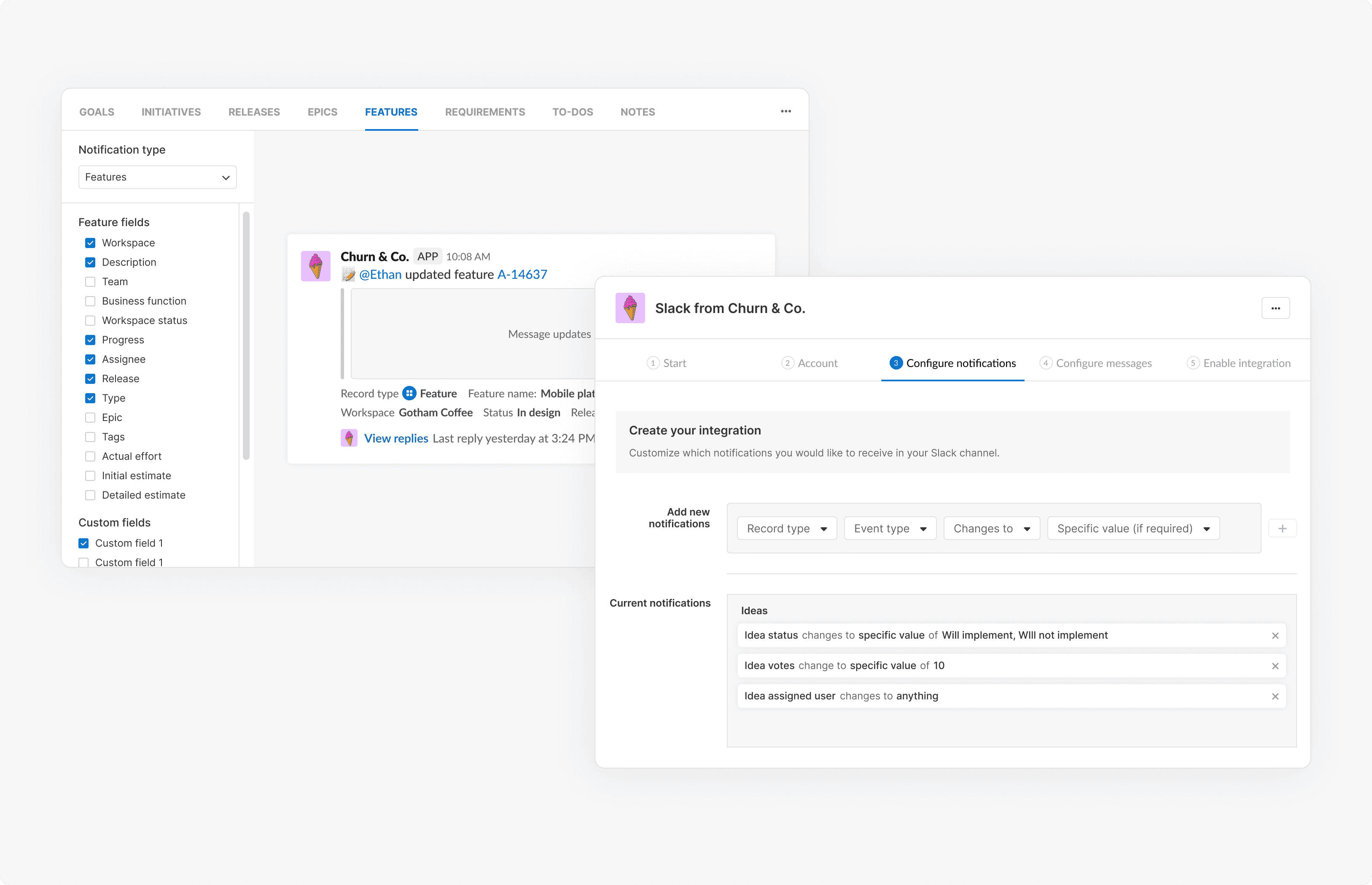
Teams can now subscribe to strategic updates from Aha! to be delivered directly into Slack channels. Everyone can stay aligned without leaving the place where product conversations are already happening.
– Principal PM
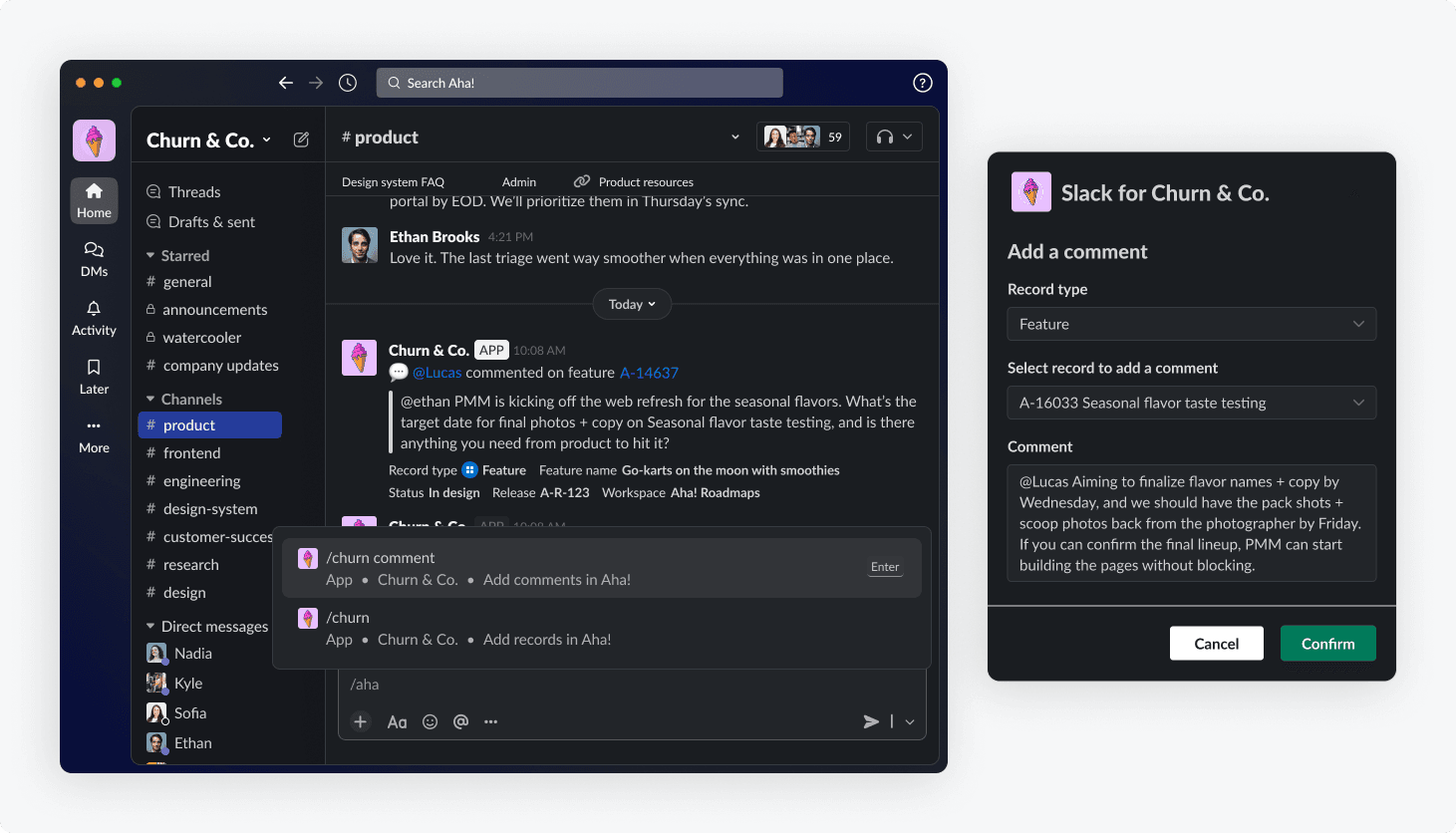
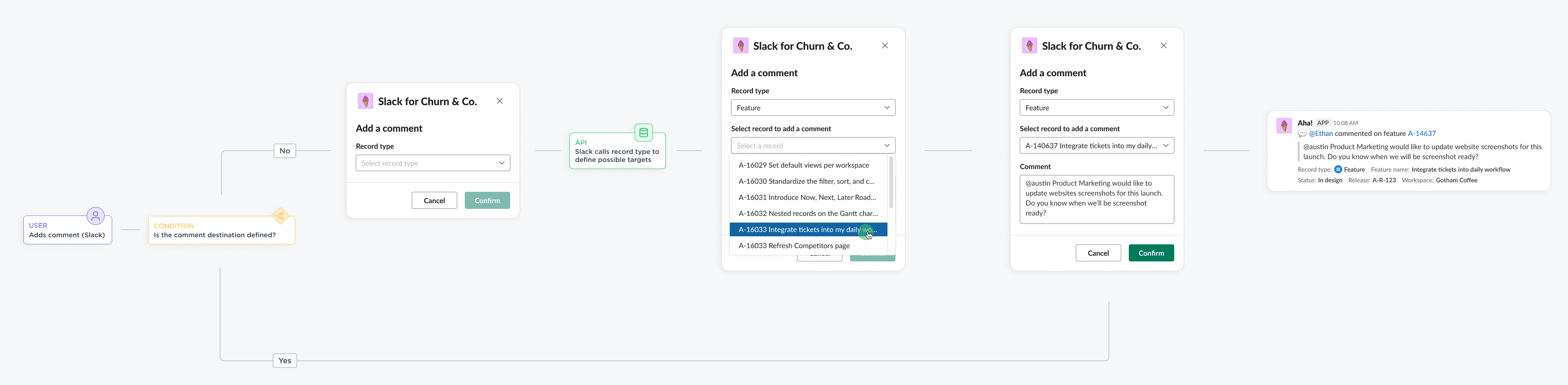
Users can post comments to Aha! directly from Slack to keep discussions tied to the right records. This preserves context and keeps decisions actionable.
To measure impact, we compared comment activity across active accounts for 60 days before and after launch. A "stranded" comment was any comment that never received a reply.
STRANDED COMMENT DROP RATE
9
%
before Slack integration
4
%
after Slack integration
We also tracked how many comments sat for more than 24 hours without a response. Slack delivery meant teammates saw updates in real-time instead of the next time they opened Aha!, which cut the rate of slow replies in half.
REPLY SPEED (% OF COMMENTS TAKING 24+ HRS)
24
%
before Slack integration
12
%
after Slack integration
Fewer messages went unaddressed. Team communication became more connected.
– Customer
Users can quickly create Aha! records right from Slack using slash commands or message shortcuts, capturing insights in the moment without interrupting the conversation.
– Senior PM
In the 60 days after launch, teams using the integration created 9% more ideas through Slack shortcuts than were previously captured through Aha! alone. The lower barrier to entry meant more ideas made it out of conversation and into the product record.
how we got there
Aha!’s notifications weren’t doing the job. A full rebuild wasn’t in scope. Slack had become where teams actually paid attention, so we made a strategic decision to meet them there.
12
We studied how teams communicated about product work to understand where the experience was falling short. Slack emerged as the primary space for active discussion, while Aha! remained the system of record.
30
survey responses
100
comment threads analyzed
discovery goal
Identify where teams felt the most friction when moving between conversations and structured product work
We chose to focus on three core problem areas.
01
Context switching weakened the connection between conversations and the product work they referenced.
Observed friction
Discussions about product work were split across Aha! and Slack. This forced users to jump between tools, breaking focus.
what we DID ABOUT IT
We built an integration that posts Aha! record updates and enables in-thread record creation, reducing switching and keeping teams aligned in one place.
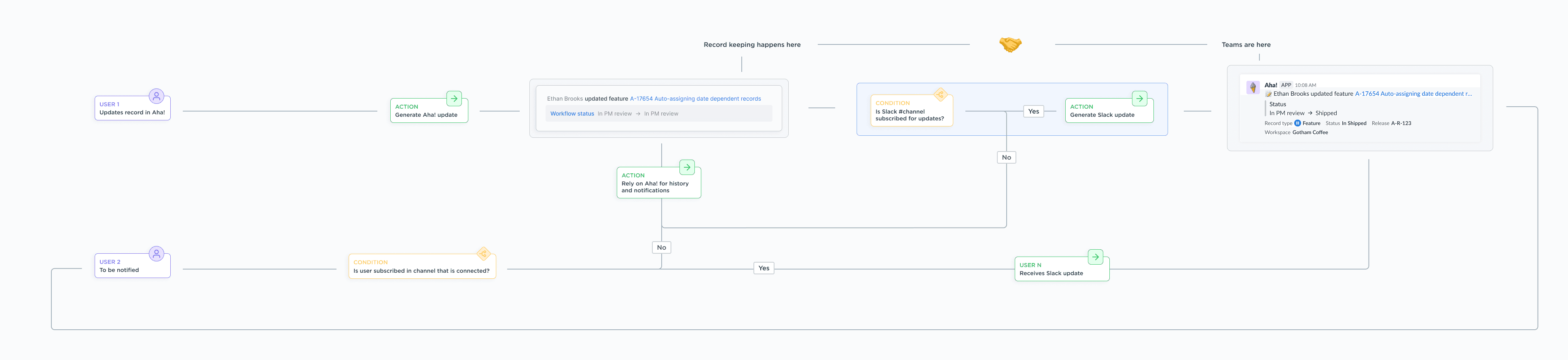
We mapped Slack interactions right to Aha! records so context stays attached to the work.
02
Critical updates competed with high-volume, low-context messages.
Observed friction
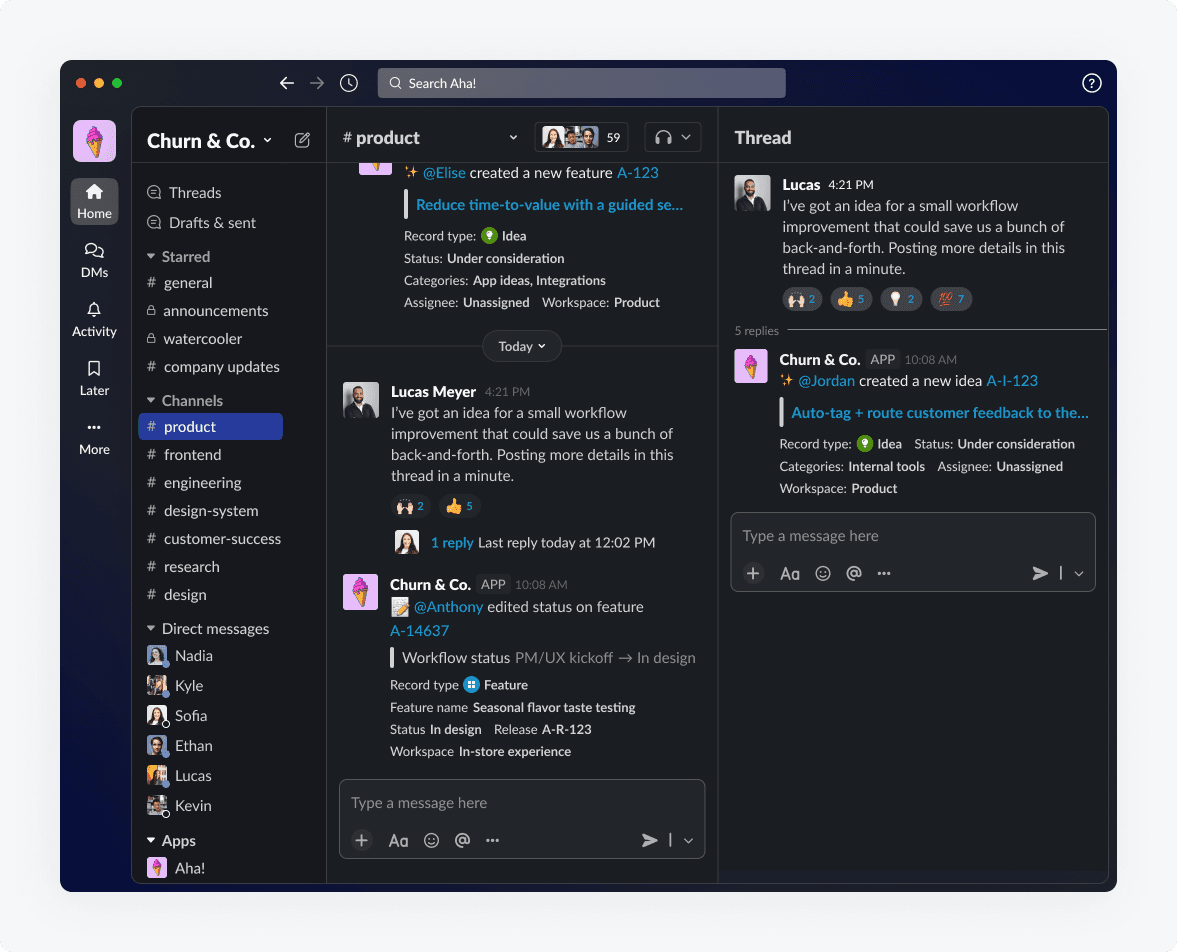
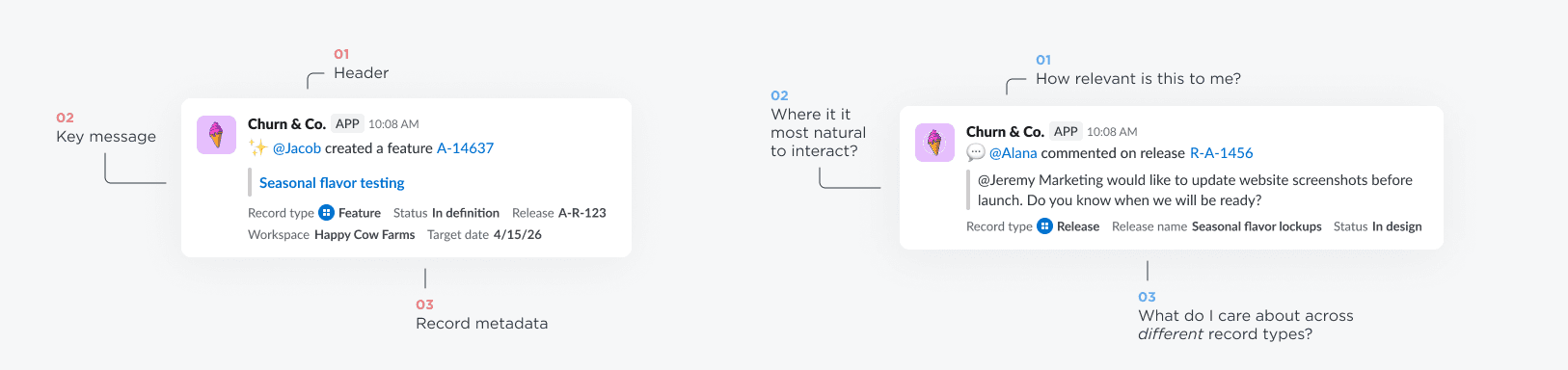
Important product updates were buried in busy Slack channels, making it difficult for teams to align on what had changed or what required attention.
what we did about it
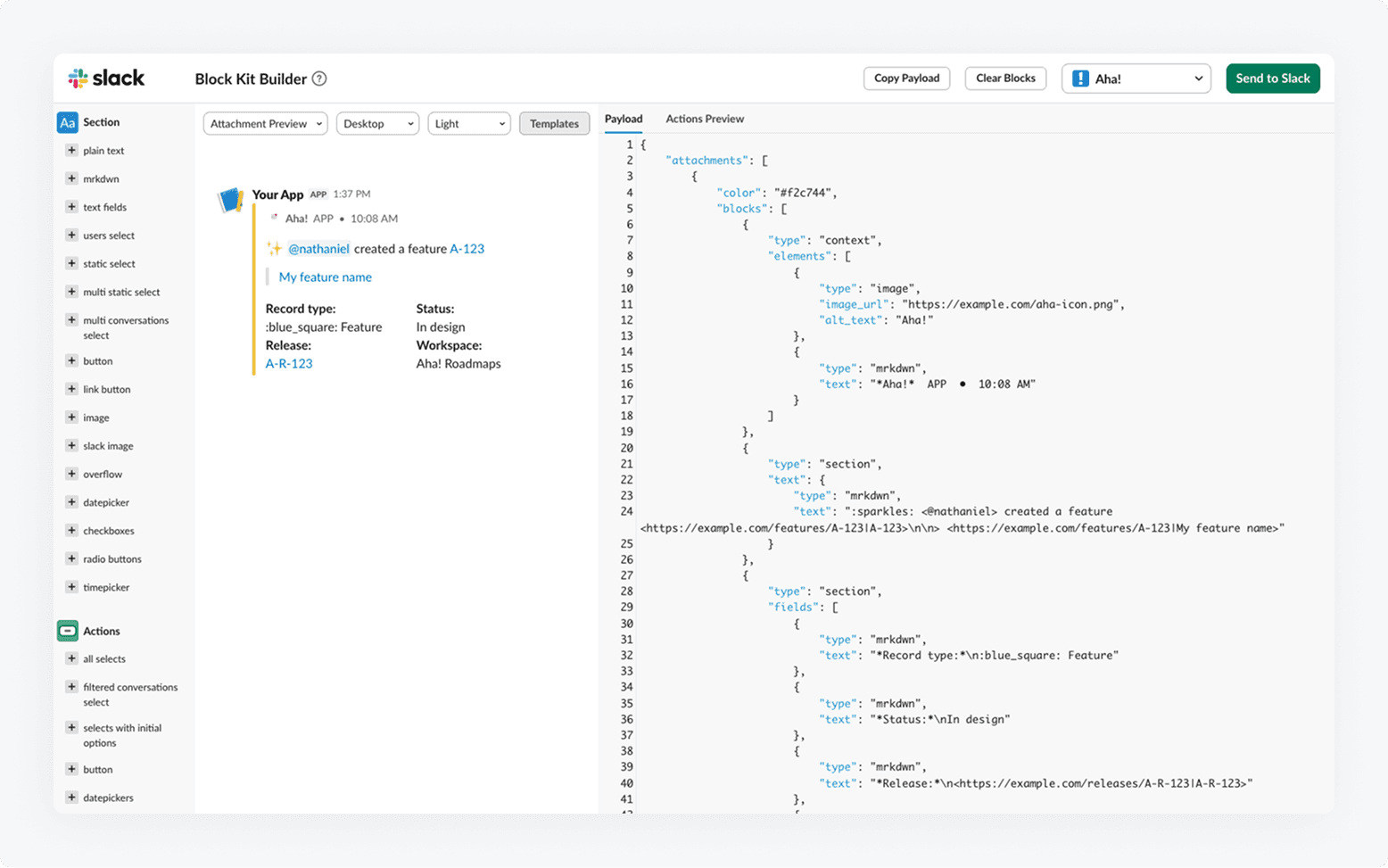
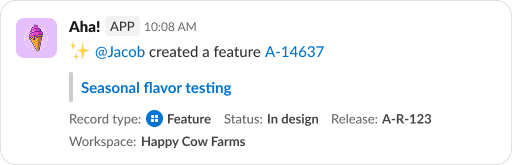
We increased the visibility of key changes by delivering structured updates that stand out in busy channels.
– CS team member
03
Discussion threads stalled because replies weren't visible.
Observed friction
Asynchronous comments fragmented conversation across teams and time zones, leaving threads unanswered and decisions delayed.
what we DID ABOUT IT
We made replying frictionless from Slack, keeping threads moving with clear alerts and a streamlined flow that lets users respond without leaving the conversation.
reflection
We received feedback that the integration added more noise than expected. That matters. Attention is finite and successful integrations should reduce challenges, not add to them. The work reinforced a familiar lesson: even thoughtful design choices come with tradeoffs, especially in complex B2B workflows.
reflection
Collaboration as core to the design process
Building an integration that spanned product, engineering, security, and co-founders took more than polished UI. It required steady alignment, clear communication, and shared clarity on what mattered most. By partnering closely with each team, we delivered a solution that met user needs while respecting technical constraints, security requirements, and business priorities.
© Copyright 2026 Kyle Tizio
•
Designed in Brooklyn, NY
Thanks for stopping by.